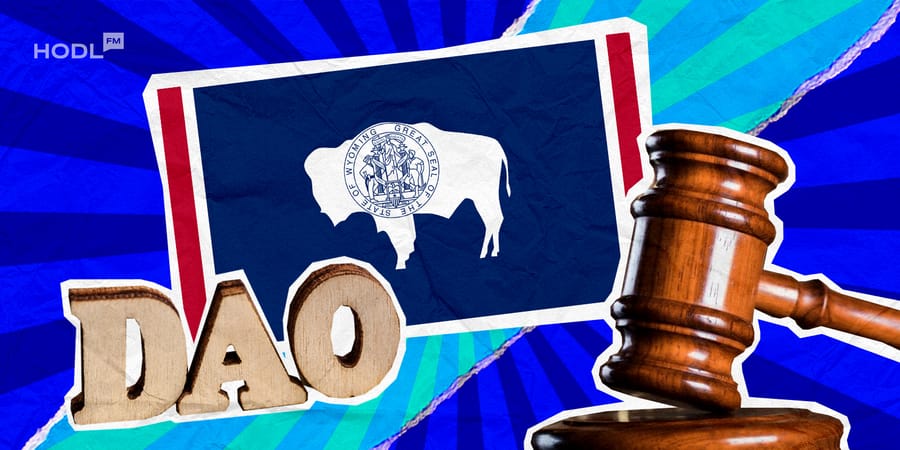



Alabama has formally recognized decentralized autonomous organizations (DAOs) under state law, becoming the second U.S. jurisdiction to do so after Wyoming. Governor Kay Ivey signed Senate Bill 277, the Decentralized Unincorporated Nonprofit Association (DUNA) Act, into law on Wednesday, according to the official Alabama Secretary of State website.
The legislation provides a legal framework for DAOs operating as nonprofit entities. These decentralized unincorporated nonprofit associations can use blockchain technology and smart contracts for governance, voting, and consensus. A DUNA must include at least 100 members who join by mutual agreement. While they can own property and engage in profit-making activities, profits cannot be distributed to members.
Miles Jennings, head of policy at a16z Crypto, praised the bill’s passage.
“Alabama is the second state after Wyoming to provide legal status and limited liability protections to DAOs, giving decentralized communities the certainty to build, govern, contract, and scale in the real world,” Jennings said. He added, “Decentralized governance is an essential component of crypto's future.”
Effective policy can catch up to technology.
— miles jennings (@milesjennings) April 1, 2026
Today, Alabama achieved exactly that by enacting the DUNA Act.
Decentralized governance is essential to crypto’s future—it’s one of the core constructs in market structure legislation.
But market structure doesn’t solve legal… https://t.co/jM6TtmNAYc
The law also shields individual members and administrators from personal liability arising from the organization’s activities. Full legal entity status allows a DAO to own property, enter into contracts, and sue or be sued in court, clarifying long-standing legal uncertainties for these structures.
Legislative process and requirements
The DUNA Act was introduced in February by Republican Senator Lance Bell. It passed the Alabama House of Representatives on March 17 with 82 votes in favor, seven against, and 16 abstentions. The law is expected to take full effect on October 1, 2026.
According to the bill, governance can operate entirely through blockchain technology. Voting, proposals, and consensus mechanisms can be stored on-chain. The legislation emphasizes nonprofit purposes, such as managing a blockchain network or other decentralized projects, while maintaining strict rules around profit distribution.
Jennings noted that federal crypto market structure bills are advancing, and domestic legal clarity is essential for builders.
“As federal crypto market structure legislation moves closer to becoming law, builders need effective domestic legal structures,” he said.
U.S. states follow DAO trends
Wyoming passed its DUNA Act in 2024, providing the first state-level legal recognition for DAOs. West Virginia has a similar DUNA bill (HB 5060) awaiting the governor’s signature. Additional states are expected to develop frameworks that recognize the growing role of decentralized organizations.
Globally, more than 13,000 DAOs exist, controlling collective assets exceeding $24.5 billion, according to data from CoinLaw. Ethereum and its layer-2 networks host more than 85% of these organizations, with the average DAO treasury around $1.2 million.
The Alabama law aims to offer clear governance, operational, and legal pathways for decentralized communities. By codifying limited liability protections, the state positions itself as a forward-looking hub for blockchain-based nonprofits.
Next steps for DAOs
As October 2026 approaches, DAOs in Alabama can begin organizing under the DUNA framework. Legal recognition could encourage growth in blockchain governance, decentralized project funding, and nonprofit initiatives with clear operational rules. The law also sets a precedent for other states exploring similar regulatory measures.
 Kristian Koch
Disclaimer: All materials on this site are for informational purposes only. None of the material should be interpreted as investment advice. Please note that, despite the nature of much of the material created and hosted on this website, HODL FM operates as a media and informational platform, not a provider of financial advisory services. The opinions of authors and other contributors are their own and should not be taken as financial advice. If you require advice, HODL FM strongly recommends contacting a qualified industry professional.