




Vitalik Buterin has renewed his criticism of Russia’s invasion of Ukraine ahead of the fourth anniversary of the full-scale war on February 24, 2026. His remarks combine personal reflections, political views, and proposals rooted in crypto governance. He frames the conflict as a moral and geopolitical issue that demands continued international support for Ukraine and long-term structural change inside Russia.
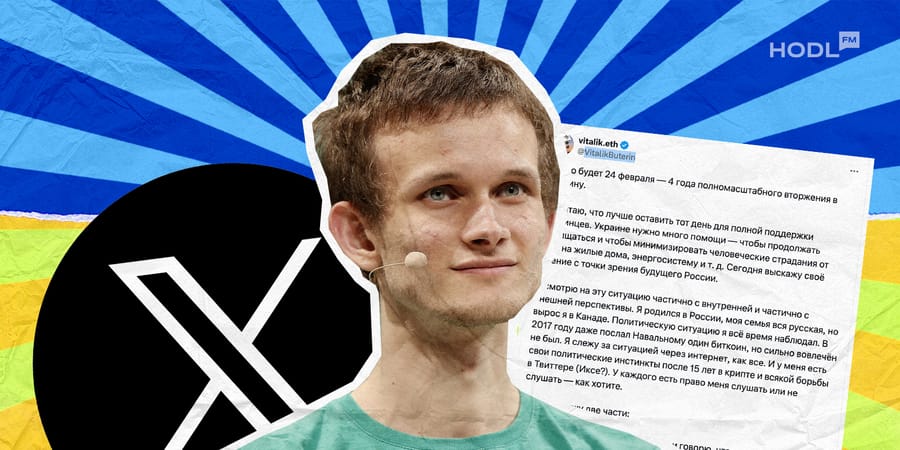
“Soon it will be February 24th — 4 years since the full-scale invasion of Ukraine,” Buterin wrote on X. “I believe it is better to leave that day entirely for full support of Ukrainians. Ukraine needs a lot of help — to continue defending itself and to minimize human suffering from attacks on residential buildings, the energy system, etc.”
Buterin describes the invasion as criminal aggression rather than a shared failure between both sides. He references his personal background to explain his perspective. He was born in Russia and raised in Canada. He followed political developments for years through public information and online discourse.
Thank you @VitalikButerin for using your voice to support Ukraine 🇺🇦
— HodlFM (@Hodl_fm) February 12, 2026
Four years of full-scale war. Four years of resilience.
It matters when leaders in our space don’t stay silent. https://t.co/fgYQ163tXQ
Personal perspective shapes political stance
Buterin places his views within a broader reflection on identity and responsibility. He points to long observation of the region’s political trajectory and his involvement in online debates around crypto and governance.
“I look at this situation partly from an insider’s perspective and partly from an outsider’s. I was born in Russia, my whole family is Russian, but I grew up in Canada. I’ve followed the political situation the whole time,” he wrote.
His comments draw a contrast between institutional changes in Ukraine and political repression in Russia. He rejects narratives that describe the conflict as morally ambiguous. He argues that Ukraine requires continued assistance to defend its territory and protect civilians from attacks on residential areas and critical infrastructure.
Pressure on Moscow and calls for sustained support
Buterin argues that sustained international pressure remains necessary. He links military and economic backing for Ukraine to broader European stability and deterrence.
He states that Russia’s leadership lacks incentives to pursue peace under current conditions. Continued external pressure could force negotiations. Support for Ukraine remains central to that strategy.
His remarks extend beyond short-term war dynamics. He outlines how long-term change inside Russia could reduce the likelihood of future aggression. The proposals draw from governance experiments within the crypto ecosystem, particularly the decentralized structures associated with Ethereum.
Crypto governance ideas enter political debate
Buterin suggests that decentralized governance models could shape future reforms in Russia. He points to mechanisms such as quadratic voting, digital democracy, and distributed decision-making. These systems aim to limit centralized authority and expand public participation.
“The goal is to build a country that, when the objective is improving people’s lives, will be maximally strong, but when the goal is oppressing minorities or aggression against neighbors, will be maximally uncoordinated and weak,” he explained.
He references tools that support large-scale public deliberation, including Pol.is, as potential frameworks for policy consultation and consensus building. These systems enable citizens to express priorities and identify areas of agreement without reliance on traditional hierarchies.
A future vision beyond the current conflict
Buterin presents a broader political vision that extends beyond the war. He argues that long-term stability in Europe and Ukraine depends on transformation within Russia’s political system. He describes the need for new leadership, institutional reform, and stronger civil participation after the current power structure changes.
He outlines a two-step direction. Ukraine requires sustained support to weaken Russia’s military capacity and compel a ceasefire. Reform inside Russia should follow. Moderate political actors could adopt decentralized governance principles and rebuild institutions that prioritize public welfare over military expansion.
The proposals intersect with a wider conversation about how technology shapes governance. Blockchain models demonstrate alternative decision-making structures and accountability mechanisms. These experiments provide examples that political systems could study.
Buterin frames his views as a contribution to debate rather than a final blueprint. He invites readers to accept or reject his ideas. His message reflects both his role in crypto innovation and his personal ties to the region’s history and politics.
The comments arrive at a symbolic moment. The fourth anniversary of the invasion approaches. Public attention shifts toward the human cost of the conflict and the long-term consequences for Europe. Buterin calls for solidarity with Ukraine and deeper reflection on Russia’s future direction.
 Gunel Ismayilova
Disclaimer: All materials on this site are for informational purposes only. None of the material should be interpreted as investment advice. Please note that despite the nature of much of the material created and hosted on this website, HODL FM is not a financial reference resource, and the opinions of authors and other contributors are their own and should not be taken as financial advice. If you require advice, HODL FM strongly recommends contacting a qualified industry professional.