


When MicroStrategy started buying billions of dollars' worth of Bitcoin, it introduced a new idea for companies to use crypto as a treasury reserve. Instead of holding cash that loses value over time, they could hold a scarce digital asset on their balance sheet.
At that time, Bitcoin was the default choice. Companies and retail investors used it like digital gold and an asset for long-term appreciation.
However, Ethereum offered much more. Beyond storing value like Bitcoin, it can be staked, generate yield, and sit at the center of DeFi, tokenization, NFTs, and smart contract settlement. As a result, Ethereum treasury companies emerged.
This term can refer to any company that holds Ethereum as part of its capital, whether the amount is large or small. But in this article, we’re going to discuss the largest ETH holders.
These eight companies are selected based on how much ETH they hold. We'll also consider how transparent they are about their holdings and whether their strategy clearly shows long-term intent.
Why companies choose Ethereum over Bitcoin
Ethereum is a programmable financial system that offers many ways to grow capital and build new technology and financial products:
- Yield generating. ETH can be staked to generate roughly 3–5% annualized yield, deployed into DeFi, integrated into block-building strategies, or restaked through platforms like EigenLayer.
- Compounding returns. Companies put it to work and compound returns in ETH itself. That shifts the treasury from static storage to active capital.
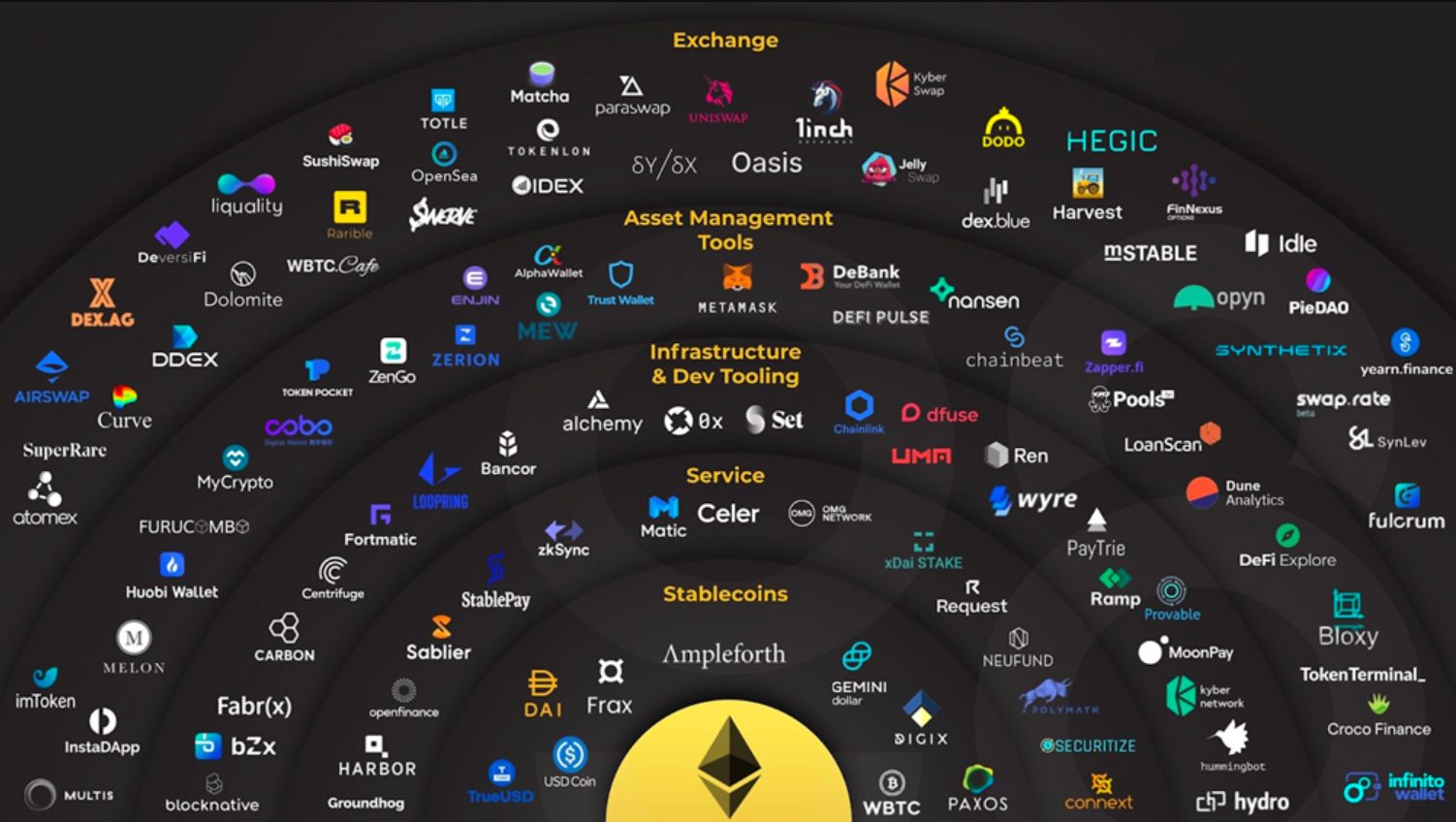
- Exposure to the Ethereum ecosystem. Ethereum is the settlement layer for stablecoins, tokenized assets, and institutional DeFi products.
- Supply Dynamics. After Ethereum switched to Proof-of-Stake, the network began issuing less new ETH, while part of every transaction fee is permanently burned, removing ETH from circulation. When activity is high, more ETH can be burned than created, reducing supply and potentially supporting its value over time.
Top Ethereum holders
Some companies accumulated large reserves of cryptocurrency through capital raises, while others built their positions through staking or product revenue.
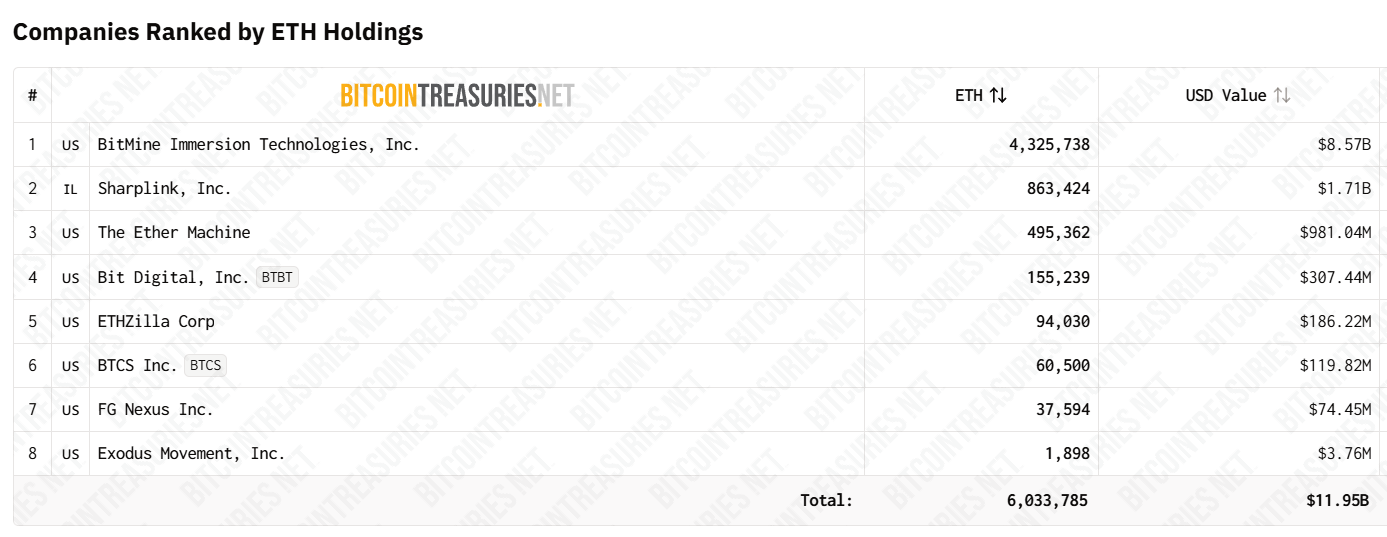
Let’s look at the ETH treasury strategies used by the companies listed below, based on data from the Bitcoin Treasuries website.
BitMine Immersion Technologies
BitMine was originally a Bitcoin mining company, but in 2025, it made a dramatic shift. According to PR Newswire, it raised $250 million and used that money to buy Ethereum instead. Today, it holds roughly 4.33 million ETH, which is the largest corporate ETH position.
Under chairman Tom Lee, the company publicly stated it wants to accumulate up to 5% of the total ETH supply.
BitMine now runs Ethereum validators through its network called MAVAN. In return, it earns staking rewards.
SharpLink
In June 2025, SharpLink became the first Nasdaq-listed company to make Ethereum its main treasury reserve. SharpLink now holds around 867,000 ETH, and almost all of it is staked. They use platforms like ether.fi and EigenLayer to earn additional yield.
The Ether Machine
As the name suggests, it is an “ether generation company.” Its core goal is to continuously generate ETH through network participation. The Ether Machine was created in 2025 through a SPAC, a company that helps firms go public.
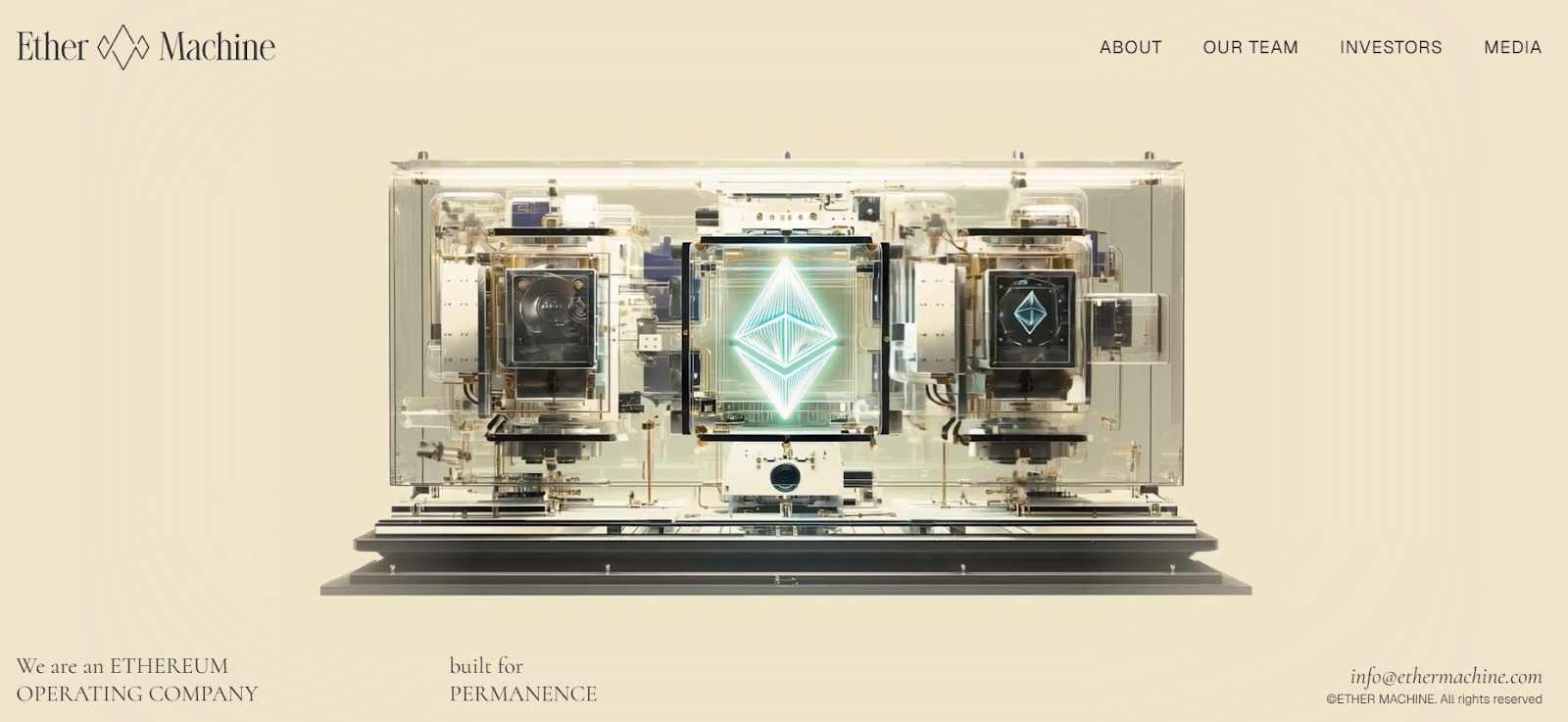
Backed by Blockchain.com, Kraken, and Pantera Capital, The Ether Machine now holds about 495,000 ETH based on data from Blocmates. Almost all of it is deployed into staking, restaking, and DeFi strategies.
Bit Digital
Bit Digital started as a traditional BTC miner. Over time, the company gradually left that segment and shifted its focus to Ethereum staking and infrastructure.
Today, it holds about 155,000 ETH, with nearly 89% staked at roughly 3.5% annual yield. The staking income helps fund its expansion into AI infrastructure through its subsidiary WhiteFiber.
ETHZilla (now Forum)
Formerly known as 180 Life Sciences and later ETHZilla, this company initially raised significant capital to build one of the largest corporate Ethereum treasuries (roughly ~94,000 ETH). However, in early 2026, the firm officially rebranded to Forum Markets and will begin trading under the ticker FRMM on March 2, signaling a major strategic pivot.
Instead of primarily accumulating and holding Ethereum, Forum is shifting away from a large ETH treasury model toward becoming an institutional-grade real-world asset (RWA) tokenization platform, focusing on on-chain products backed by income-generating assets such as manufactured home loans and aviation-related assets.
This transition reflects a broader evolution from passive ETH holding to building tokenized financial infrastructure on Ethereum Layer 2 networks, prioritizing revenue from asset origination, management fees, and secondary market activity rather than ETH price exposure alone.
BTCS
BTCS is fully focused on Ethereum infrastructure. The company holds around 70,000 ETH, much of it actively deployed in validator and block-building operations. Validators secure the network, while block builders assemble Ethereum blocks by selecting and organizing transactions, a role that generates additional revenue.
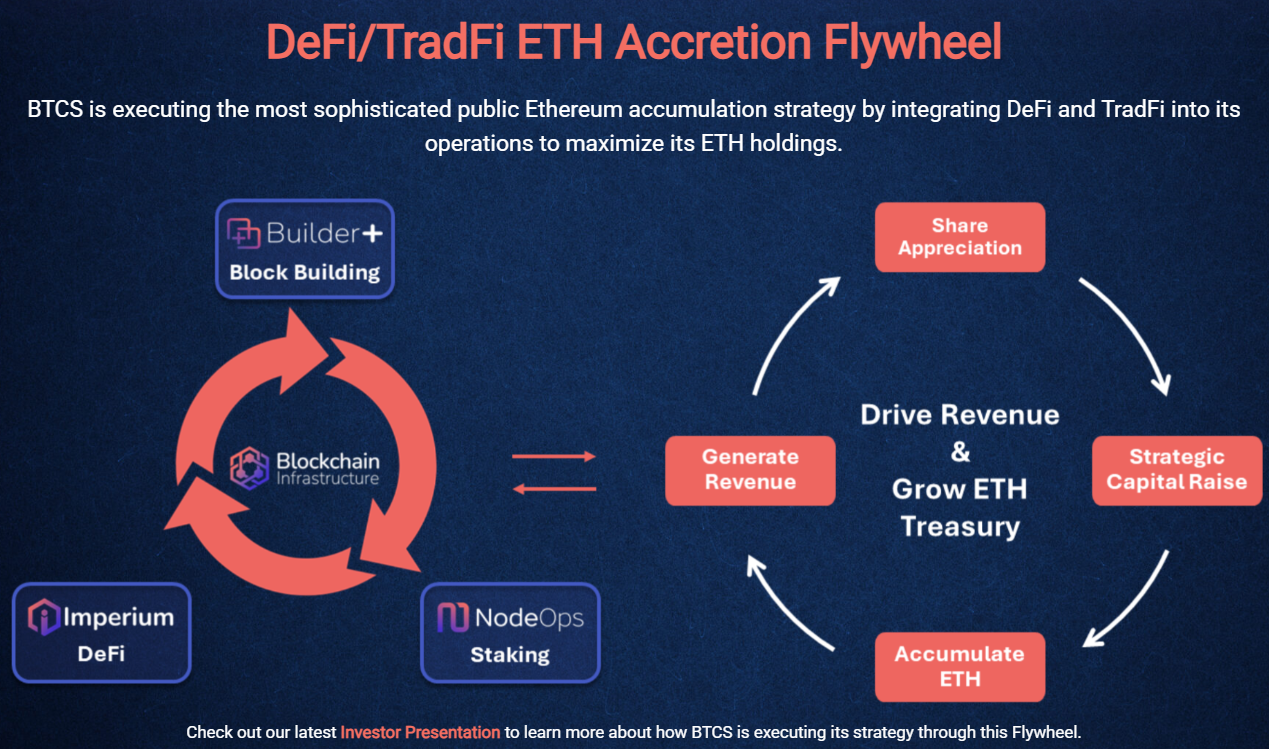
In 2025, BTCS issued the first dividend paid in Ethereum and reported more than $16 million in annual revenue, a 290% increase year-over-year.
FG Nexus
FG Nexus raised $200 million and accumulated about 37,500 ETH. As reported by ValueThe Markets News, it later partnered with Securitize to tokenize its own shares on Ethereum. It means issuing blockchain-based versions of company stock.
Exodus
Exodus is a self-custodial crypto wallet company. It's the only one in this list that earned 2,800 ETH naturally through product revenue rather than intentional treasury accumulation.
BTC and SOL are also part of Exodus’s diversified treasury reserve. At the same time, its ETH power features like XO Swap and may support future tokenized equity initiatives.
The corporate shift toward Ethereum
Eight companies, the largest Ethereum holders, fall into three categories:
- Former Bitcoin miners reinvented themselves around Ethereum. Companies like BitMine and Bit Digital replaced mining revenue with staking revenue.
- Treasury-focused companies treat ETH as a core balance sheet asset. SharpLink, The Ether Machine, and FG Nexus raised capital specifically to accumulate and deploy ETH.
- Infrastructure and product-driven companies earn ETH through operations. BTCS generates revenue by running Ethereum infrastructure, Exodus earns ETH through its wallet product, and ETHZilla shifts toward tokenizing real-world assets.
For everyday investors and observers, these companies serve as signals. When public firms allocate hundreds of millions or even billions into ETH, it shows real confidence in Ethereum’s long-term future.
 Kataryna Dyl
Disclaimer: All materials on this site are for informational purposes only. None of the material should be interpreted as investment advice. Please note that, despite the nature of much of the material created and hosted on this website, HODL FM operates as a media and informational platform, not a provider of financial advisory services. The opinions of authors and other contributors are their own and should not be taken as financial advice. If you require advice, HODL FM strongly recommends contacting a qualified industry professional.