



The Ethereum Foundation has begun directly funding anti-scam operations through a sponsorship with Security Alliance (SEAL), a crypto security nonprofit focused on disrupting wallet drainers and other social engineering attacks targeting Ethereum users.
SEAL said the foundation has sponsored a dedicated security engineer under its Trillion Dollar Security initiative.
The role is narrowly defined: working full time with SEAL’s intelligence team to identify, track, and neutralize drainer infrastructure aimed at Ethereum wallets.
How crypto drainers target users
Drainers have appeared as one of the most persistent threats facing crypto users. Rather than exploiting smart contract bugs, they rely on deception. Attackers clone the interfaces of well-known protocols, lure users into signing routine-looking wallet approvals, and then immediately siphon assets once permission is granted.
“These scammers deploy fake websites imitating trusted protocols to convince the user to approve a few simple transactions in their wallet. If the user does, their wallet is quickly drained of all valuable assets,” SEAL said.
Well-known families such as Angel and Inferno have continued to evolve, with new variants appearing even after public shutdowns.
Nearly $1 billion in losses over several years
Data from crypto intelligence platform ScamSniffer estimates that drainers and related phishing schemes have resulted in close to $1 billion in stolen funds over the past several years.
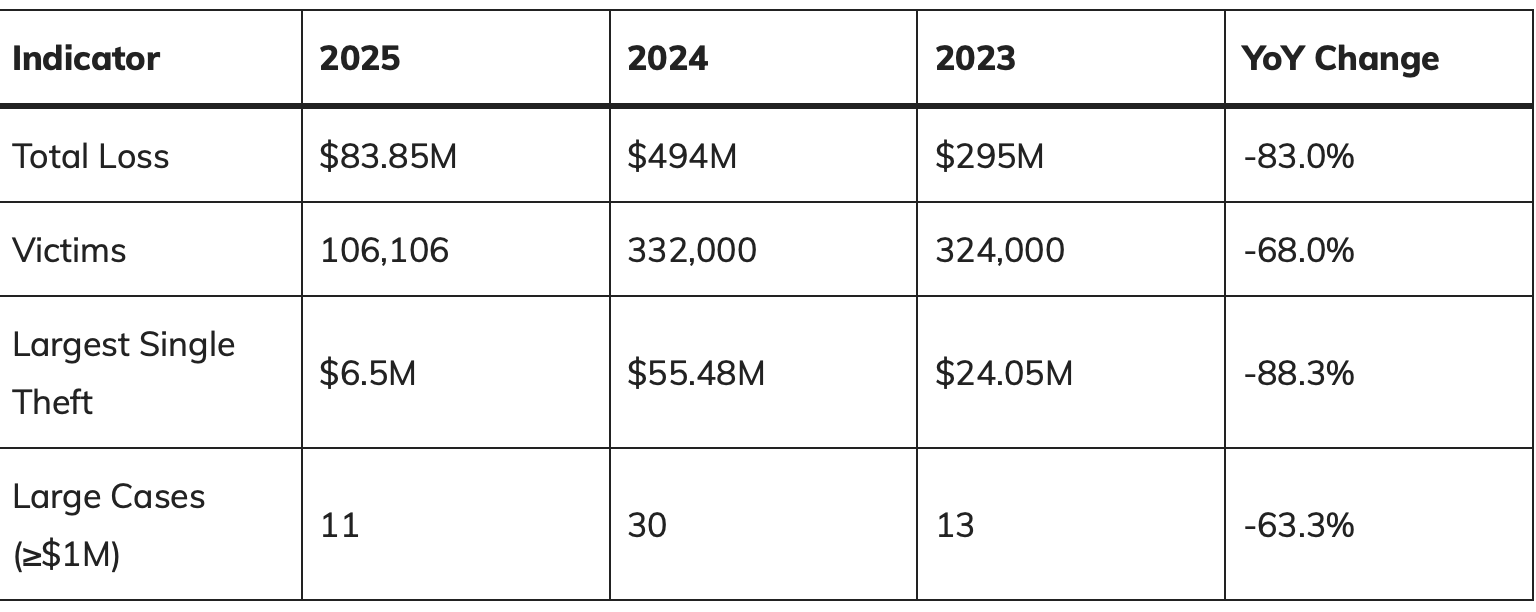
SEAL said losses fell sharply in 2025, reaching roughly $84 million, the lowest level recorded since tracking began.
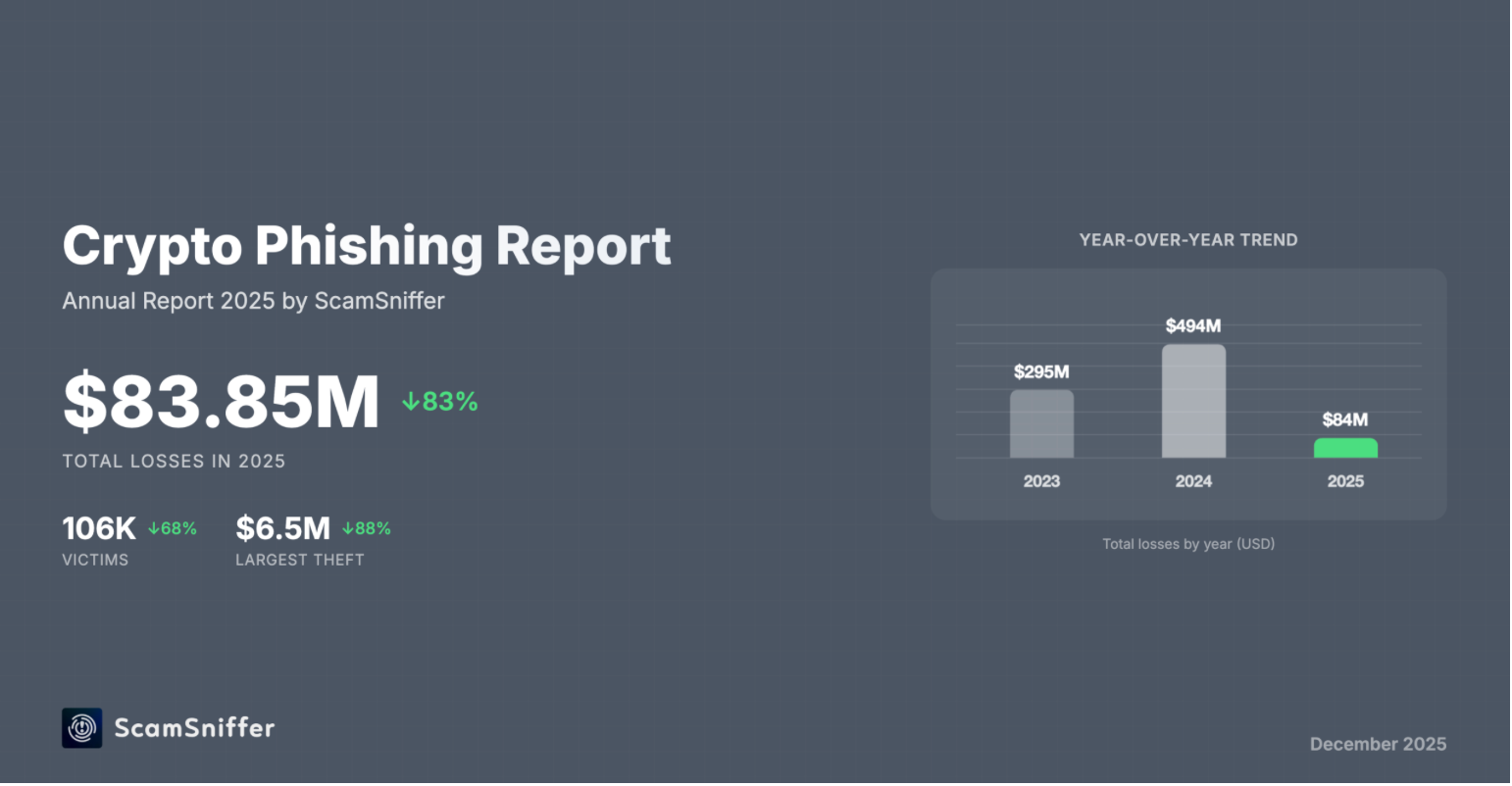
The nonprofit attributed the decline to active intervention efforts combined with quieter market conditions, rather than a permanent resolution of the threat.
Trillion Dollar Security framework guides response
SEAL’s Trillion Dollar Security initiative is designed to address systemic risk rather than isolated incidents. The framework tracks six areas of concern, including wallet user experience, smart contract security, infrastructure, consensus mechanisms, monitoring and incident response, and governance at the social layer.
“Our collaboration with the Ethereum Foundation is the first of many planned initiatives with forward-thinking ecosystems,” SEAL said
The nonprofit said its research suggests a small, well-funded security team can keep pace with drainer development if intelligence collection and response efforts are tightly coordinated.
Industry collaboration expands real-time defenses
Founded in 2023 by white-hat researcher samczsun, SEAL operates as a coordination layer for on-chain threat intelligence. The group works with industry partners to share phishing indicators and respond to emerging attack campaigns in real time.
MetaMask and Phantom joined SEAL’s phishing defense network last year, alongside WalletConnect and Backpack, extending coverage across some of the most widely used Ethereum wallets.
The Ethereum Foundation sponsorship is intended to test that approach in practice.
 Maryna Hornieieva
Disclaimer: All materials on this site are for informational purposes only. None of the material should be interpreted as investment advice. Please note that despite the nature of much of the material created and hosted on this website, HODL FM is not a financial reference resource, and the opinions of authors and other contributors are their own and should not be taken as financial advice. If you require advice, HODL FM strongly recommends contacting a qualified industry professional.