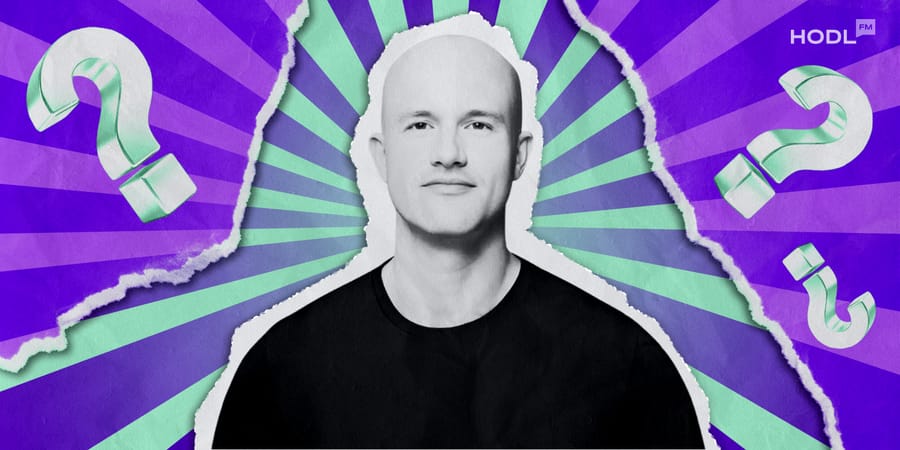



Back in 2012, buying Bitcoin meant navigating sketchy websites that looked like they'd steal your credit card. Brian Armstrong, then a software engineer at Airbnb, kept thinking someone should fix this. So he did.
Today, Armstrong runs Coinbase, which processes billions in crypto transactions and introduced your uncle, your hairdresser, and maybe your parents to Bitcoin. Armstrong went from a frustrated engineer to running the exchange that brought crypto to your neighbors.
Early background and path to Coinbase
Armstrong was born on January 25, 1983, in San Jose. His parents were both engineers. He went to Rice University in Houston and studied economics alongside computer science, finishing in 2005. Stayed another year for his master's.
Nothing about his early career screamed "future billionaire." He worked at IBM writing code. Then he consulted for Deloitte, which involves a lot of PowerPoint presentations and business casual attire. Standard stuff.
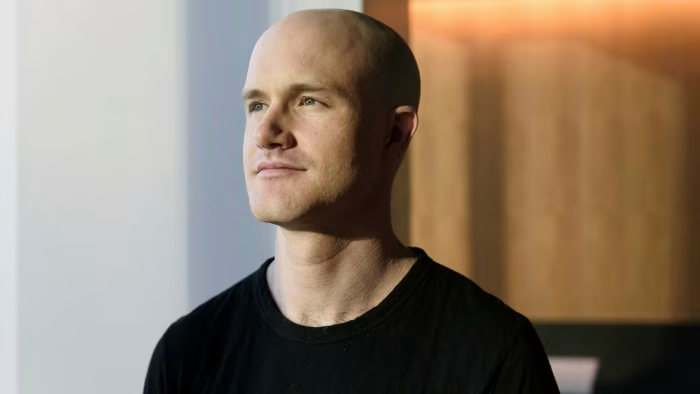
In 2010, someone forwarded him the Bitcoin whitepaper. Most people who read Satoshi Nakamoto's technical document either got confused or thought it was a libertarian fantasy. Armstrong had a different reaction. He saw an actual solution to problems he'd noticed but couldn't fix.
After joining Airbnb in 2011, those problems became obvious. Airbnb operates across 190 countries. Trying to pay a host in Buenos Aires meant banks took three days, charged ridiculous fees, and sometimes the money just vanished into the international banking system. Bitcoin could theoretically solve this, except nobody could figure out how to actually use Bitcoin.
In June 2012, he quit Airbnb to build something better. He applied to Y Combinator with a straightforward idea: make buying Bitcoin as simple as buying a book on Amazon. Y Combinator liked it but told him he needed a co-founder by the end of the week.
Brian Armstrong's role at Coinbase
Early crypto companies moved fast and ignored rules. Armstrong did the opposite, which made him unpopular.
While competitors added every new cryptocurrency that launched, Coinbase took months reviewing each one. People complained. They wanted obscure tokens. Armstrong's team kept saying no unless the token passed legal review and technical standards. Boring? Absolutely. Smart? Turned out yes, when regulators started shutting down exchanges that listed anything.
He also did something strange for crypto: Coinbase got licensed. They obtained money transmitter licenses in every US state. They hired compliance officers. They worked with banks, which most crypto companies treated like the enemy.
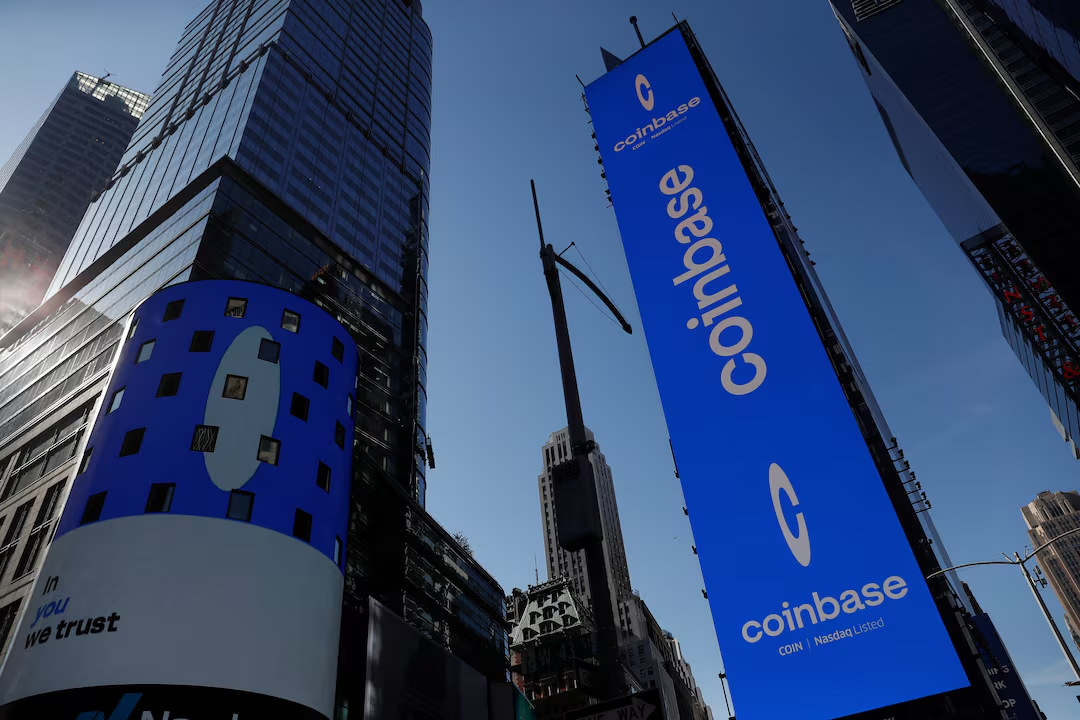
In April 2021, Coinbase went public on Nasdaq. The company hit an $86 billion valuation in the same month. Suddenly, Armstrong's boring approach looked brilliant.
Then he made another controversial decision. In September 2020, Armstrong wrote a blog post saying Coinbase would focus only on cryptocurrency. Employees shouldn't discuss politics or social issues at work. If they disagreed, they could leave with severance.
Armstrong talks about Bitcoin hitting $1 million by 2030 sometimes. He's mentioned it as a possibility, not a prediction he'd bet his reputation on. In August 2021, he posted on X that Coinbase would drop $500 million buying crypto and put 10% of profits into digital assets from now on.
Coinbase does way more than let people buy crypto now. Big institutions needed somewhere safe to park billions in Bitcoin, so Coinbase built custody services. Serious traders wanted better tools, so they built those. They even launched Base, which is its own blockchain.
Current status and personal life
Armstrong's exact net worth is impossible to pin down. It moves with Coinbase stock, which moves with Bitcoin, which never sits still. Forbes put him at $10-11 billion today. He owns about 14% of Coinbase. The company pulled in $6.6 billion last year.
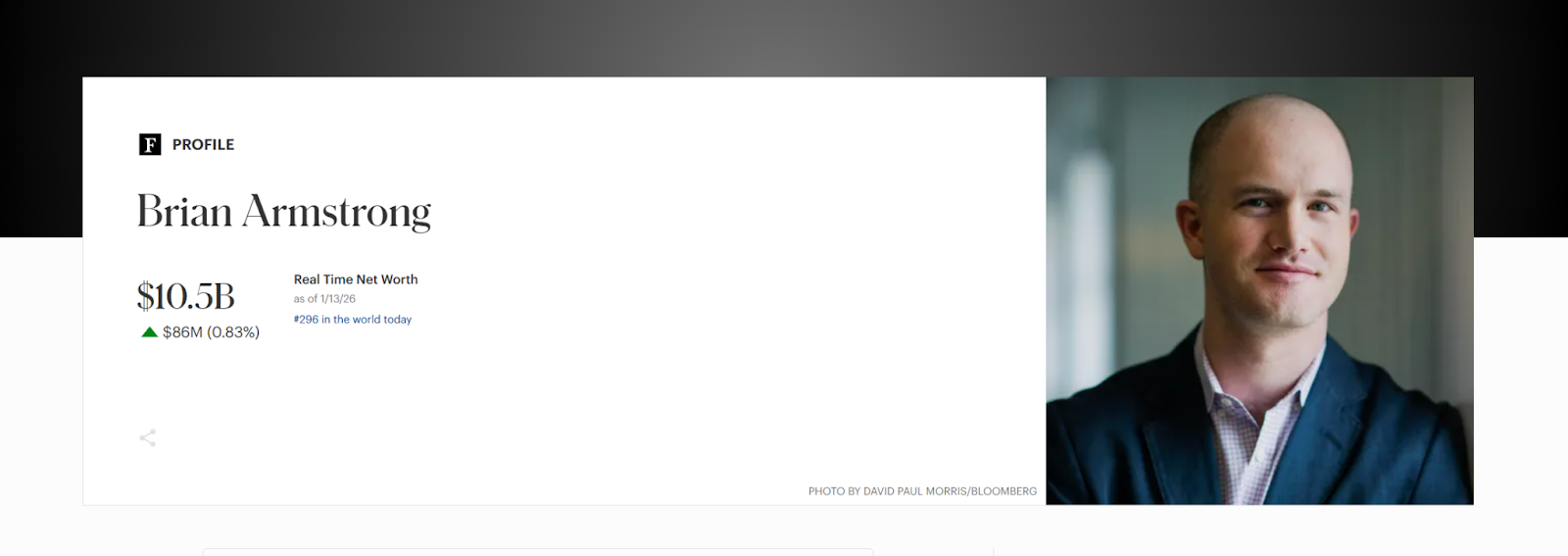
He's famously private about personal life, so people noticed when he posted in October 2024:
"I got married this past weekend to my long-term partner and best friend, Angela Meng!"
At 41, it was his first marriage. Angela Meng is 35, moved from Beijing to the US at 11, and built a career in investment banking at Lazard before doing journalism for Reuters and South China Morning Post. They live in Los Angeles, not San Francisco.
On February 27, 2025, the SEC dismissed the case. They announced a new "Crypto Task Force" to develop actual regulations instead of suing first and explaining later. This reversal, following the 2024 election results, validated what Armstrong had been arguing for years.
Influence on crypto regulation
Armstrong spent years pushing for regulatory clarity. Not because he opposed rules, but because he thought unclear rules hurt everyone.
He testified before Congress multiple times. He met privately with regulators. He published detailed proposals for how crypto regulation should work. In 2022, he laid out a framework covering licensing, stablecoin standards, and creating a dedicated crypto regulatory body.
Coinbase backed advocacy with real money. According to OpenSecrets, the company spent $3.88 million on federal lobbying in 2024. Armstrong also created Fairshake, a super PAC focused on electing pro-crypto politicians. Fairshake spent roughly $40 million backing Ohio Republican Bernie Moreno in his successful race against crypto-skeptic Senator Sherrod Brown. Coinbase itself contributed $25 million to Fairshake, with Armstrong personally donating $1 million.
His pitch focused on real-world use cases. People in Venezuela are using stablecoins because their currency collapsed. Immigrants are sending money home for pennies instead of paying Western Union's fees. Small businesses in Africa are accessing financial services for the first time.
Beyond Coinbase
Armstrong invests in projects that have nothing to do with crypto. He co-founded NewLimit, a biotech company researching aging. He's put $130 million of his own money into figuring out if humans can live longer, healthier lives.
He also built ResearchHub, which tries to make scientific papers free and accessible instead of locked behind paywalls. Scientists can share research, collaborate, and build on each other's work.
In 2018, Armstrong signed the Giving Pledge and became the first crypto CEO to promise to give away most of his wealth eventually.
What comes next
Armstrong's choices largely determined whether crypto stayed niche or went mainstream. His compliance focus worked even when it looked boring compared to competitors chasing headlines.
Regulatory winds shifted dramatically following the 2024 elections. Armstrong spent years arguing that enforcement by lawsuit was backwards. New approaches emerging suggest that the argument gained traction.
For anyone actually considering Coinbase, our Coinbase review covers real details about how it works, costs, and security. Armstrong built it for people who found crypto confusing because he was that person in 2010 when everything kept crashing.
Patient building versus fast growth remains the question as crypto scales. He missed booms by moving slowly. Survived crashes that killed competitors. Boring sometimes wins.
 Anastasiia G
Disclaimer: All materials on this site are for informational purposes only. None of the material should be interpreted as investment advice. Please note that despite the nature of much of the material created and hosted on this website, HODL FM is not a financial reference resource, and the opinions of authors and other contributors are their own and should not be taken as financial advice. If you require advice. HODL FM strongly recommends contacting a qualified industry professional.