




The start of 2026 is already bringing notable shifts in crypto. Morgan Stanley named custodians for its Bitcoin ETF, while Coinbase faced UK lawmakers’ questions on stablecoins and compliance.
In the US, Kraken gained limited access to the Federal Reserve’s Fedwire system, and Ripple upgraded its stablecoin payments platform for banks and fintechs.
Together, these illustrate crypto’s growing reach into traditional finance, payments infrastructure, and regulatory frameworks.
Top gainers and losers
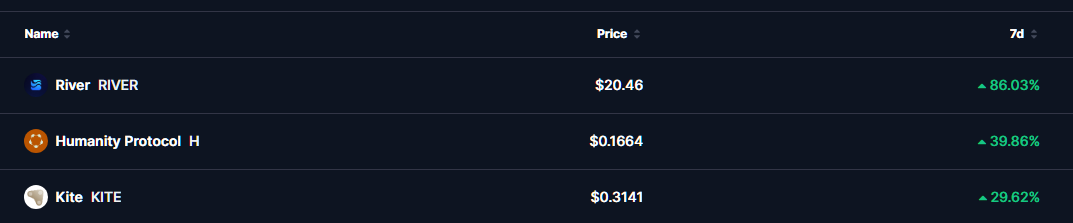
- River (RIVER) - Amazing growth of 86.03% to a price of $20.46 this week
- Humanity (PROTOCOL H) - 39.86% rise over the week to end price of $0.1664
- Kite (KITE) - Rise of 29.62% to a price of $0.3141 this week
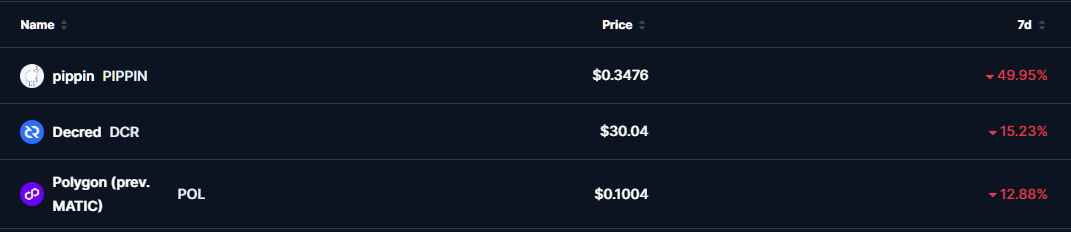
- pippin (PIPPIN) - 49.95% dropped to a price of $0.3476 this week
- Decred (DCR) - lost 15.23% to end week price of $30.04
- Polygon (POL) - 12.88% loss, end week price stopped at $0.1004
Morgan Stanley turns to Coinbase and BNY Mellon for bitcoin ETF custody
Morgan Stanley has named Coinbase and BNY Mellon as custodians for its proposed Bitcoin exchange-traded fund, according to a filing submitted to the U.S. Securities and Exchange Commission. The filing states that the fund’s Bitcoin will be held primarily in cold storage.
In practice, that means the private keys controlling the assets remain offline, a security standard widely used by institutional custodians. A smaller allocation may be transferred to online wallets when needed to process share creation or redemption. Both custodians operate under New York regulatory frameworks. BNY Mellon holds a state banking charter, while Coinbase Custody is licensed as a New York limited-purpose trust company.
Morgan Stanley submitted separate applications in January for spot ETFs linked to Bitcoin and Solana. Like other spot crypto funds, these vehicles would hold the underlying tokens directly rather than relying on derivatives contracts, allowing the share price to track movements in the asset itself.
On Tuesday, the iShares Bitcoin Trust managed by BlackRock recorded about $322 million in inflows. Those inflows helped offset redemptions in competing funds run by Fidelity Investments and Grayscale Investments. US spot Bitcoin ETFs attracted roughly $683 million in net inflows during the same week after a prior stretch of withdrawals that totaled several billion dollars.
Morgan Stanley executives have already signaled interest in expanding the bank’s digital-asset capabilities.
During the firm’s fourth-quarter earnings call in January, chief executive Ted Pick told analysts the bank was “well positioned now in the crypto and tokenized asset space,” adding that further development in the area was under consideration.
Launching a spot ETF would place Morgan Stanley alongside the large asset managers that now dominate the regulated crypto-investment market. Funds operated by firms such as BlackRock, Fidelity, and Grayscale have become a primary gateway for institutional investors seeking exposure to Bitcoin through traditional brokerage accounts rather than direct ownership of digital wallets.
UK lords question Coinbase on stablecoins, KYC, and financial stability
The United Kingdom House of Lords questioned Coinbase on stablecoins during a parliamentary inquiry, examining potential bank-run scenarios as well as compliance with anti-money laundering and Know Your Customer (KYC) regulations.
Tom Duff Gordon, Coinbase’s vice president for international policy, told the committee that fully reserved, regulated stablecoins are “safer than uninsured bank deposits,” as each coin is backed one-to-one by cash and high-quality government securities. He said stablecoins could reduce payment costs, accelerate cross-border transactions, and support new AI-driven payment flows.
The Lords raised concerns about whether stablecoins might draw deposits away from UK banks or shift financial risk to non-bank issuers. Duff Gordon responded that such fears are “wildly exaggerated,” noting that major corporates and card networks already use stablecoins to lower payment costs without destabilizing the system.
Committee members also questioned the role of stablecoins in illicit finance. Duff Gordon explained that Coinbase’s compliance programs cover KYC, AML checks, and sanctions screening. He added that on-chain transparency and exchange-level monitoring can make policing illicit activity more straightforward than handling traditional cash.
Concerns over regulation were also discussed.
Duff Gordon cautioned that overly strict proposals from the Bank of England and Financial Conduct Authority regarding capital, holding limits, and rewards could stifle competition. Adam Jackson, chief strategy officer at Innovate Finance, said the UK risked falling behind the EU’s Markets in Crypto Assets (MiCA) rules and the United States’ GENIUS Act, describing a regulatory approach that could be “more prescriptive and less competitive.”
The session contrasted with earlier testimony, where critics including Chris Giles and Arthur E. Wilmarth Jr questioned whether stablecoins could become a mainstream form of money in the UK, with Wilmarth Jr calling the GENIUS Act a “disastrous mistake” for allowing non-bank entities into the money business.
Kraken gains limited master account access with Kansas City Fed
US cryptocurrency exchange Kraken has become the first crypto firm to receive a limited-purpose master account from the Federal Reserve Bank of Kansas City, giving its banking unit direct access to the Fed’s core payment system, Fedwire.
“As we know, the payments landscape is actively evolving,” said Kansas City Fed President Jeff Schmid.
The account does not include full banking privileges such as interest on reserves, but allows Kraken Financial, the exchange’s banking arm, to move funds along the same rails used by banks and credit unions.
Wyoming-based Payward Financial, Kraken’s banking entity, was approved as a “Tier 3” participant. Co-CEO Arjun Sethi said,
“With a Federal Reserve master account, we can operate as a directly connected financial institution.”
The approval is limited to one year and includes restrictions designed for Kraken’s business model and risk profile.
Journalist Eleanor Terrett described the decision as signaling a more accommodating approach to crypto from the Fed compared with previous administrations, noting that this might
"This could kick off a surge of Fed master account applications from other crypto firms.” she specified
US Senator Cynthia Lummis noted the approval as an important step for digital assets in the US, according to The Wall Street Journal.
Fed governor Christopher Waller introduced the concept of “skinny” master accounts in 2025, explaining that such accounts allow the central bank to tailor services to the risk profile of individual firms. Kraken Financial’s account is an example of this model, giving the firm direct Fed access while maintaining limitations appropriate for a non-traditional banking entity.
Ripple expands stablecoin payments platform for banks and fintechs
The company’s Ripple Payments platform, which connects financial institutions to blockchain-based settlement rails, now supports a full stablecoin workflow, including collection, custody, conversion, and payout.
The San Francisco-based firm said the upgrade allows participants to reduce reliance on traditional correspondent banking networks, which often tie up capital and delay international payments.
Ripple is currently live in over 60 markets and has processed more than $100 billion in transaction volume. Institutions using the network include Switzerland’s AMINA Bank, Brazil’s Banco Genial, Malaysia’s ECIB, and Philippines-based AltPayNet.
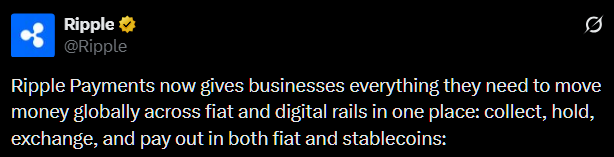
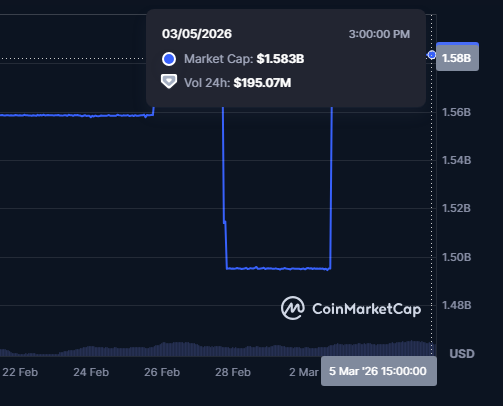
The expansion builds on Ripple’s recent acquisitions of custody and treasury automation company Palisade and Rail, a platform for holding and exchanging fiat and stablecoins. Ripple acquired Rail in August 2025 for $200 million. The company’s dollar-pegged stablecoin, Ripple USD (RLUSD), has a circulating supply of about $1.5 billion, representing a growing share of the global stablecoin market.
Ripple’s push into institutional stablecoin payments coincides with regulatory developments, including conditional approvals from the US Office of the Comptroller of the Currency for national trust bank charters.
Stuart Alderoty, Ripple’s chief legal officer, participated in a February White House meeting with other crypto and banking representatives to discuss the proposed US crypto market structure legislation, highlighting the company’s involvement in shaping emerging stablecoin regulations.
 Gunel Ismayilova
Disclaimer: All materials on this site are for informational purposes only. None of the material should be interpreted as investment advice. Please note that, despite the nature of much of the material created and hosted on this website, HODL FM operates as a media and informational platform, not a provider of financial advisory services. The opinions of authors and other contributors are their own and should not be taken as financial advice. If you require advice, HODL FM strongly recommends contacting a qualified industry professional.