

This week in crypto, major developments span from high-profile scams to innovations in payments and network growth.
Traders lost funds in a Uniswap phishing scam, Bitcoin payments are becoming easier and faster, institutional use of the Lightning Network is growing, and Binance has responded to allegations of sanctions violations.
Here’s a closer look at each story.
Top Gainers and Losers
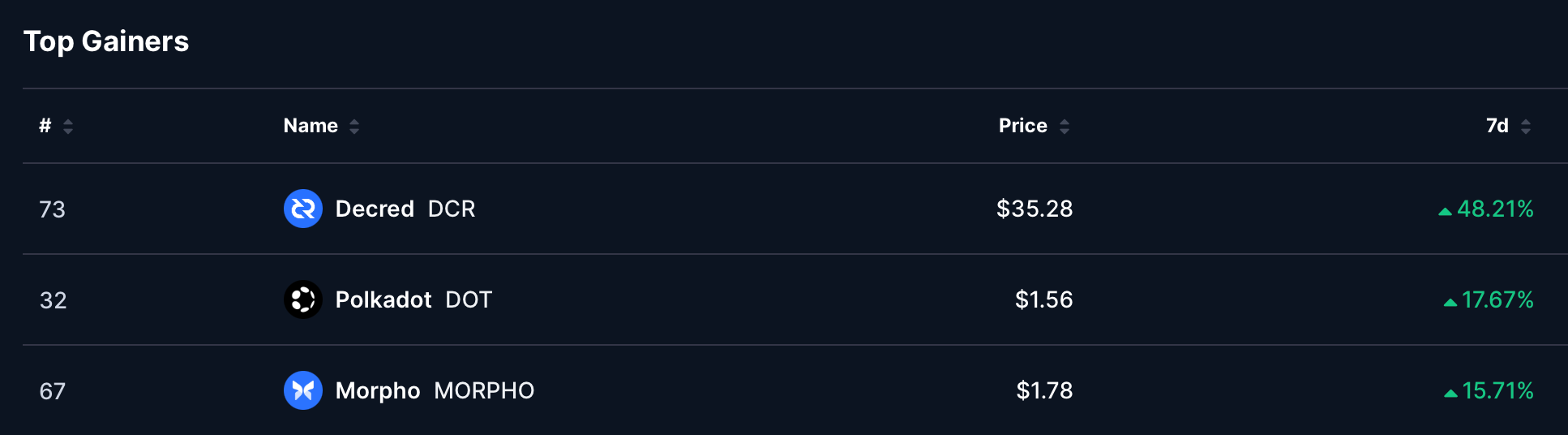
- Decred (DCR) - Gained amazing 48.21% this week to a price of $35.28
- Polkadot (DOT) - coming next with 17.67% growth and week price $1.56
- Morpho (MORPHO) - 15.71% up to end price of $1.78
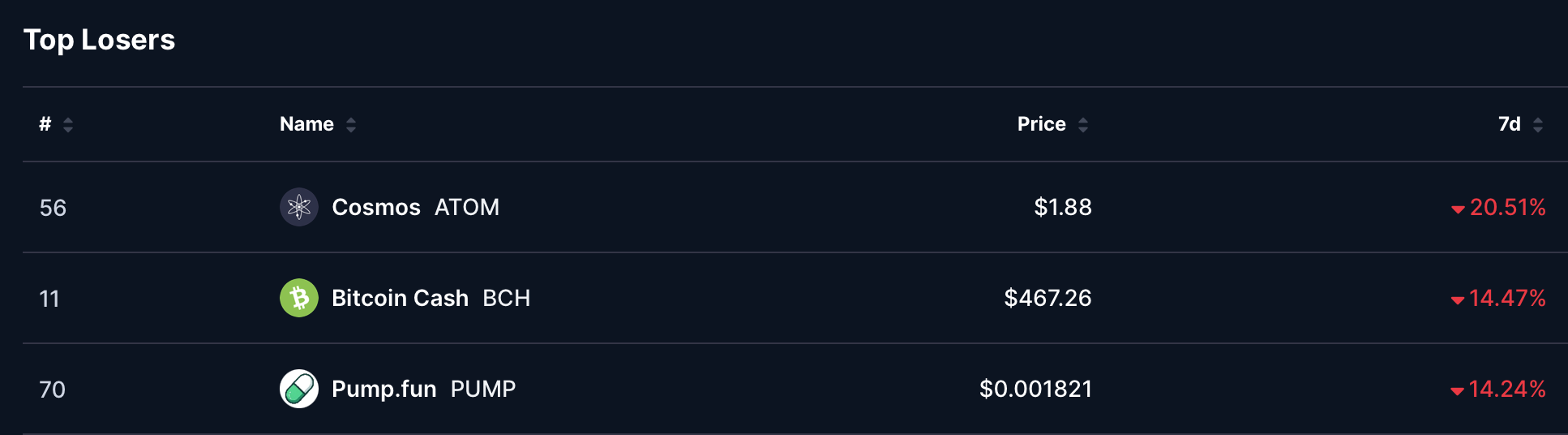
- Cosmos (ATOM) - 20.51% decline to a price of $1.88
- Bitcoin Cash (BCH) - lost around 14.47% this week to end price of $467.26
- Pump.fun (PUMP) - 14.24% drop to end price of $0.001821
Trader loses hundreds of thousands in Uniswap phishing Google ad scam
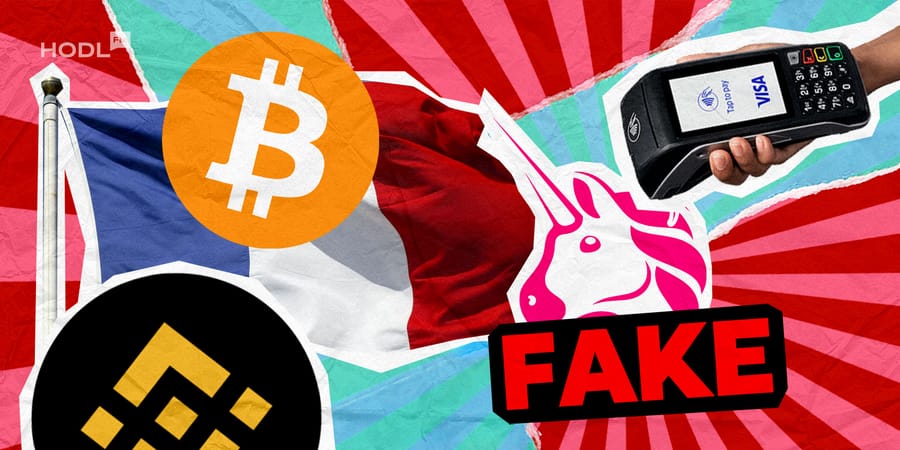
The scam led victims to a fraudulent website that mimicked Uniswap, a popular decentralized exchange, and tricked users into signing malicious wallet transactions that allowed attackers to drain assets. Polymarket trader lost hundreds of thousands of dollars after clicking on a fake Uniswap ad that appeared at the top of Google search results.
Briefly how this works.
Attackers buy Google Ads targeting searches for popular wallets like Phantom and MetaMask. Clicking the ad leads to a phishing site that either steals login credentials or tricks users into creating a “new” wallet that’s actually controlled by the scammer, giving them instant access to any transferred funds.
Trader publicly said the scam cost him a six-figure sum, described as his entire net worth, though confirmation had not been obtained at the time of publication.

Chainalysis and other investigators have repeatedly flagged Google phishing ads as a major attack vector, with similar schemes in July 2025 costing another user $1.2 million. Security researchers identified the wallet drainer tool, AngelFerno, as the culprit a “scam-as-a-service” script targeting DeFi users and previously linked to attacks on OpenEden and Curvance. Fraudsters often use Cyrillic Punycode URLs to make fake sites visually indistinguishable from legitimate platforms.
Uniswap Founder Hayden Adams, also reacted to this on his X:
'These scams are horrible, we’ve been fighting them for years. There were scam Uniswap apps while we waited months for App Store approval, and scam ads keep returning despite years of reporting them. Meanwhile, tools that help users block malicious ads are restricted. The ad economy around this needs to change.'
Forensic investigator ZachXBT also weighed in after the incident, arguing that stronger enforcement is needed against phishing ads appearing through Google’s search platform.
Engie weighs Bitcoin mining at Brazil solar project to use surplus power
French utility Engie is evaluating whether excess electricity from its newly launched Assu Sol solar plant in Brazil, could eventually support battery storage or bitcoin mining, as renewable producers face mounting curtailment losses.
Eduardo Sattamini, Engie’s country manager in Brazil, said the company is looking for large power users that could absorb surplus output from the 895-MW facility, which recently entered full commercial operation but has already encountered grid restrictions that force renewable plants to scale back generation when supply exceeds demand.
"We are looking at some possible offtakers,"
Curtailment has become a growing issue across Brazil’s solar and wind sector since 2023, driven by rapid capacity growth, transmission limits and slower demand expansion. Engie is considering whether on-site batteries or energy-intensive data centers, including bitcoin mining, could convert that unused electricity into revenue.
Any such project would take time to develop, Sattamini noted, pointing to a multi-year timeline.
“It will take a couple of years for us to implement.”
The discussion comes as parts of the mining industry rethink how their infrastructure is used. Companies such as Bitfarms, IREN and Bitdeer Technologies have begun shifting some capacity toward artificial intelligence and high-performance computing, often using hardware supplied by Nvidia and cloud partnerships with firms like Microsoft.
Numo launches tap-to-pay Bitcoin app for merchants using Cashu
Bitcoin payments are getting a contactless upgrade. Numo has launched a free, open-source Android tap-to-pay app that lets merchants accept Bitcoin via NFC and Lightning, without extra hardware or platform fees.
Built on the Cashuprotocol, the app is available as a direct APK download, with a Google Play release planned. It uses NFC to emulate a merchant tag, allowing customers’ Cashu wallets to send payment tokens in seconds.
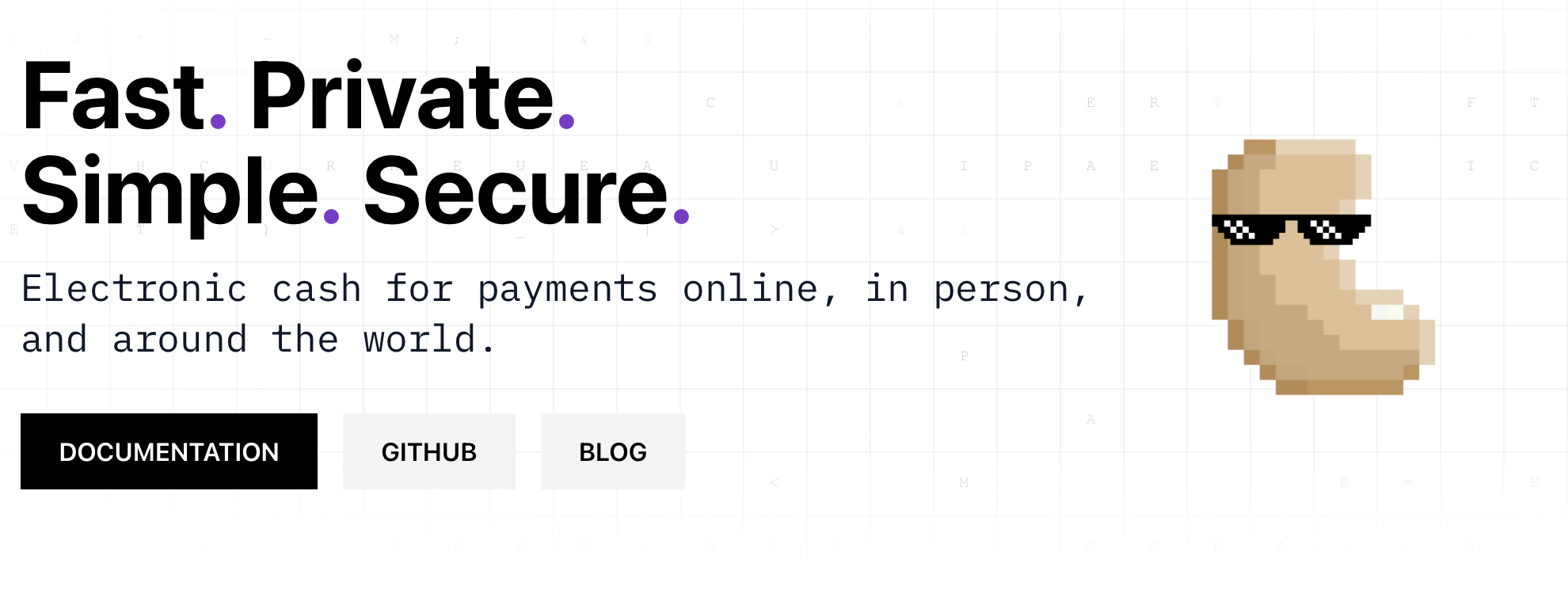
Payments initially settle as Cashu ecash, with automatic withdrawals to merchants Lightning addresses once balances reach a set threshold, streamlining fund management, and supports Lightning invoices, broadening compatibility across Bitcoin wallets.
Numo includes inventory management, transaction history, offline payments, and tipping support. Integration with BTCPay Server is underway, appealing to self-hosted merchants. The project is fully open-source under MIT, with backing from OpenCash.
“Bitcoin payments should be as easy as tapping your phone,” Numo said
Cashu’s privacy-focused ecash model underpins the app, using blind signatures and programmable token scripts to enable flexible, self-custodial Bitcoin payments. With major exchanges like Binance and OKX expanding deposits and withdrawals, liquidity across the network’s channels is increasing, making instant, low-fee Bitcoin transactions more viable.
By leveraging NFC and Lightning, Numo taps directly into these developments, enabling merchants to accept Bitcoin seamlessly while aligning with the network’s expanding capacity and adoption.
Binance CEO denounces WSJ report on Iran crypto flows as defamatory
Binance CEO Richard Teng has sharply rejected a Wall Street Journal report alleging the exchange facilitated $1.7 billion in crypto transfers to Iranian entities, calling the coverage “defamatory claims” in a Tuesday X post.
“Recently there has been inaccurate reporting about our compliance program.” Richard Teng stated
The WSJ article claimed internal investigators were fired or suspended after uncovering the transfers, which the report linked to Iran-backed groups.Teng’s legal team sent a letter to WSJ editor-in-chief Emma Tucker demanding immediate corrections and a full retraction.
Similar claims appeared the same day in a New York Times article, which cited four investigators and reported $1.7 billion flowed from two Binance accounts to Iranian entities.
Binance called both reports “categorically false” and mentioned a company blog post detailing its compliance program.
At a time, a Binance spokesperson, Rachel Conlan, said the exchange acted on concerns raised by its internal investigators and found no evidence of sanctions violations. The accounts tied to the alleged $1.7 billion in transfers to Iranian entities were removed, and Binance notified the relevant authorities.
“Any suggestion that Binance knowingly allowed sanctionable activity to continue unchecked is incorrect and defamatory,” Ms. Conlan said.
The dispute comes amid heightened scrutiny however.
US Senator Richard Blumenthal has opened an inquiry requesting records related to transfers involving two Hong Kong entities identified by Binance investigators as the source of the funds.
“Binance appears to have ignored warnings and recommendations to prevent Iranian money laundering schemes on its cryptocurrency exchange,” Mr. Blumenthal wrote.
Separately, former CEO Changpeng Zhao, who stepped down in 2023 after a $4.3 billion settlement over anti-money laundering failures and later received a presidential pardon, recently appeared at a crypto forum backed by US President Donald Trump and his family.
Zhao discussed plans for Binance.US to expand operations domestically, signaling continued engagement by the exchange’s leadership despite the ongoing controversy.
 Roman Zaika
Disclaimer: All materials on this site are for informational purposes only. None of the material should be interpreted as investment advice. Please note that, despite the nature of much of the material created and hosted on this website, HODL FM operates as a media and informational platform, not a provider of financial advisory services. The opinions of authors and other contributors are their own and should not be taken as financial advice. If you require advice, HODL FM strongly recommends contacting a qualified industry professional.