






Uniswap Labs and Securitize have introduced on-chain trading access for BlackRock’s USD Institutional Digital Liquidity Fund through UniswapX. The integration connects a major tokenized Treasury product to decentralized execution infrastructure under a permissioned framework designed for institutional investors.
The announcement confirms that shares of the fund, known as BUIDL, can move through UniswapX with settlement on public blockchain rails while access remains restricted to pre-qualified participants. The structure reflects a hybrid model. Institutional compliance rules remain intact, yet settlement occurs on-chain.
“Our mission at Labs is simple: make exchanging value cheaper, faster and more accessible,” said Hayden Adams, founder and CEO of Uniswap Labs in the annoucement. “Enabling BUIDL on UniswapX with BlackRock and Securitize supercharges our mission by creating efficient markets, better liquidity, and faster settlement. I’m excited to see what we build together.”
Today, we are announcing a strategic integration in collaboration with @Securitize, to make @BlackRock USD Institutional Digital Liquidity Fund (BUIDL) available to trade via UniswapX through Securitize pic.twitter.com/eXfnLTUkVU
— Uniswap Labs 🦄 (@Uniswap) February 11, 2026
Tokenized Treasury fund enters decentralized execution layer
The BUIDL fund, managed by BlackRock, holds more than $2 billion in assets backed primarily by short-term U.S. Treasuries and cash equivalents, according to rwa.xyz data. Investor interests exist as digital tokens. Securitize oversees issuance, onboarding, and compliance.
The new integration allows whitelisted investors to request quotes for BUIDL through UniswapX. Trades settle on-chain through smart contracts after counterparties provide pricing through the request-for-quote system. Approved market participants include Flowdesk, Tokka Labs, and Wintermute.
Securitize Markets manages permissions and investor eligibility. The system does not rely on open automated liquidity pools. Participation requires prior approval and regulatory checks.
“This is the unlock we've been working toward: bringing the trust and regulatory standards of traditional finance to the speed and openness for which DeFi is known,” said Carlos Domingo, CEO of Securitize. “For the first time, institutions and whitelisted investors can access technology from a leader in the decentralized finance space to trade tokenized real-world assets like BUIDL with self-custody.”
Institutional DeFi framework shapes the structure
UniswapX operates as a request-for-quote execution layer. The model mirrors over-the-counter mechanics. Market makers submit competitive quotes. Settlement occurs atomically on-chain. Access remains restricted.
This framework aligns with requirements for regulated products such as tokenized Treasury funds. The architecture enables bilateral trades between qualified investors and approved liquidity providers. Transactions remain continuous throughout the day and across weekends.
BlackRock disclosed a strategic investment within the Uniswap ecosystem. The company also stated that it does not provide investment advice related to the integration and makes no assurances about liquidity or performance outcomes tied to UniswapX.
“This collaboration with Uniswap Labs alongside Securitize is a notable step in the convergence of tokenized assets with decentralized finance,” said Robert Mitchnick, global head of digital assets at BlackRock. “The integration of BUIDL into UniswapX marks a major leap forward in the interoperability of tokenized USD yield funds with stablecoins.”
Market reaction reflects uncertainty and short-term volatility
The announcement triggered immediate market activity around UNI, the governance token tied to the Uniswap ecosystem. Prices rose sharply after headlines linked the infrastructure to BlackRock’s tokenized Treasury fund. The rally reversed within the same trading window as large holders distributed tokens into the move.
On-chain data showed a decline in supply held by major wallets during the surge. Selling pressure emerged near local highs. Price retraced a large portion of the gains after the initial reaction. No public disclosure confirmed that BlackRock purchased UNI tokens despite speculation.
Infrastructure milestones attract attention and trading activity. Sustained price trends depend on adoption levels and continued usage rather than a single announcement.
Tokenization architecture divides into two models
The integration arrives during rapid growth in tokenized real-world assets. RWA.XYZ data shows distributed tokenized assets at $24.7 billion. Represented assets total $366.31 billion and remain locked inside issuer platforms.
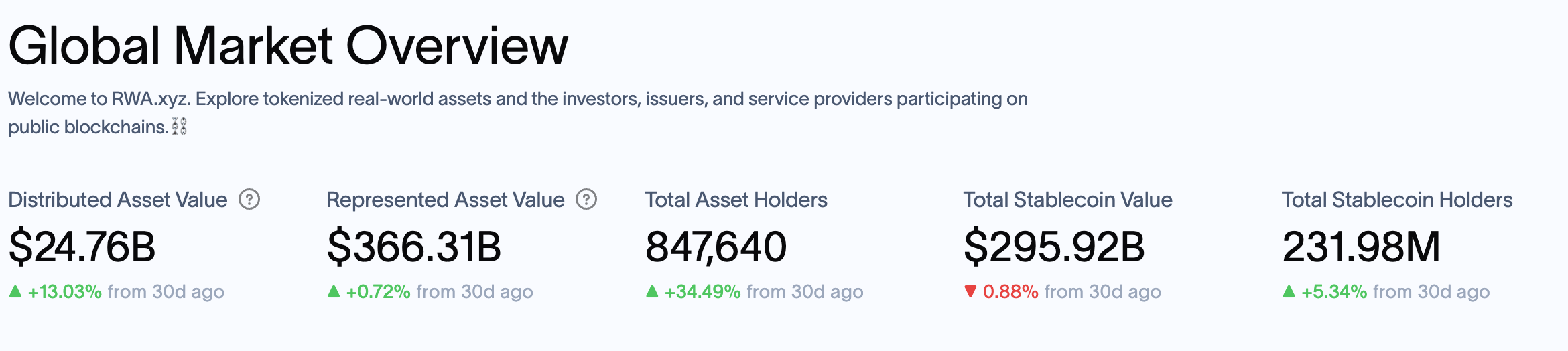
BUIDL belongs to the distributed category. Tokens can move wallet to wallet and support on-chain settlement. The fund has over one hundred holders and reports hundreds of millions of dollars in monthly transfer volume. A minimum investment requirement applies for qualified purchasers.
The structure contrasts with represented tokenization, where transfers occur within internal systems rather than across public blockchain networks. Distributed assets carry higher operational complexity yet enable broader interoperability and collateral use cases.
Execution layer becomes the focal point for institutional adoption
The integration does not shift the entire BUIDL supply into decentralized markets. It establishes an execution venue for a regulated asset that institutions already trust. Securitize manages onboarding and permissions. UniswapX provides settlement and quote aggregation.
The model shows how decentralized infrastructure can serve as the technical backbone for institutional products without adopting full permissionless participation. Smart contracts execute trades. Access controls remain strict.
This approach positions decentralized protocols as settlement and execution rails rather than open marketplaces. Institutions retain compliance frameworks and investor screening. Blockchain infrastructure handles pricing competition, trade execution, and final settlement.
The collaboration reflects a broader intersection between traditional asset management and decentralized technology. Tokenized Treasury funds, regulated access, and on-chain execution now coexist within a single structure. The long-term impact will depend on adoption, regulatory clarity, and the willingness of institutions to route more assets through blockchain-based settlement.
 Gunel Ismayilova
Disclaimer: All materials on this site are for informational purposes only. None of the material should be interpreted as investment advice. Please note that despite the nature of much of the material created and hosted on this website, HODL FM is not a financial reference resource, and the opinions of authors and other contributors are their own and should not be taken as financial advice. If you require advice, HODL FM strongly recommends contacting a qualified industry professional.