


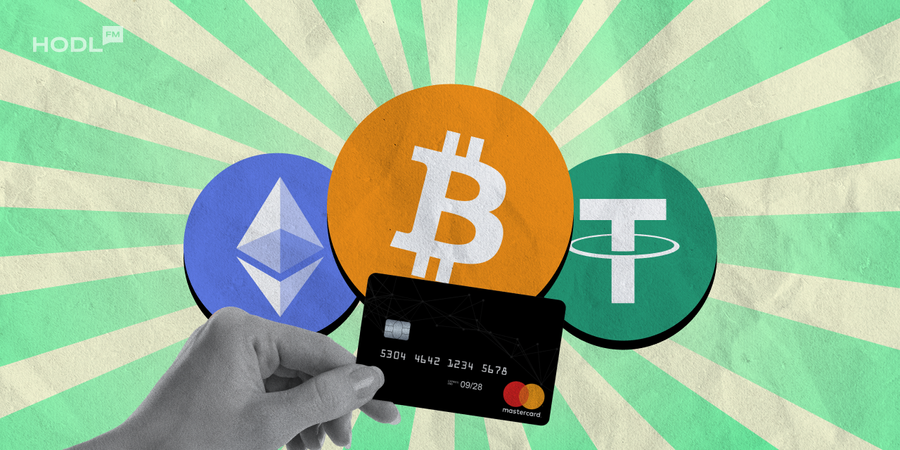



Global payments company Mastercard has introduced a new initiative that brings together more than 85 companies from the digital asset and financial services sectors to collaborate on blockchain-based payment infrastructure.
Digital assets are entering a new phase. What once ran in parallel to existing financial systems is increasingly being applied to solve practical, real-world needs — often behind the scenes – from cross-border remittances to B2B money transfers. This creates new opportunities to… pic.twitter.com/DZ1gjmW8og
— Mastercard (@Mastercard) March 11, 2026
The program, called the Mastercard Crypto Partner Program, will connect crypto companies, payment providers, banks and blockchain developers in an effort to explore how digital asset technology can integrate with the global payment systems that already support everyday commerce.
In the announcement published on March 11, 2026, Mastercard executives stated that digital assets have begun to move beyond experimentation and into practical financial use cases.
“Digital assets are entering a new phase,” Mastercard executives wrote in the announcement.
The company highlighted use cases such as cross-border remittances, payouts and business-to-business transfers as areas where blockchain tools have begun to support financial services behind the scenes.
Collaboration across the crypto and payments ecosystem
The program includes exchanges, infrastructure firms, financial institutions, and blockchain networks. Participants include companies such as Binance, Circle, Gemini, PayPal, Ripple, Polygon Labs, Crypto.com, MoonPay, and Fireblocks.
Blockchain networks such as Solana and infrastructure providers such as Paxos and BitGo also joined the initiative.
Participants will work with Mastercard teams to discuss product design and the direction of new services that combine blockchain-based payment capabilities with traditional card networks.
The initiative aims to connect on-chain technology with the payment rails that support merchants, banks and consumers across global markets.
“Recognizing how much there is to learn from the innovators building on chain every day, the program will allow expertise and insights to flow both ways as we shape the future together,” Mastercard executives said in the announcement.
Focus on real-world payment use cases
Mastercard framed the initiative around practical financial services rather than experimental blockchain projects.
The company pointed to use cases where digital assets already support payment infrastructure. These include global money transfers, commercial payments and settlement systems.
Executives said collaboration between technology developers and financial institutions will help transform technical innovation into deployable services.
“The focus is practical execution: translating technical innovation into scalable, compliant use cases that can operate across markets and integrate seamlessly into everyday commerce,” the announcement stated.
Mastercard’s payment network connects banks, merchants and consumers in more than 200 countries and territories. The company believes blockchain payment solutions will reach wider adoption only if they integrate with existing infrastructure.
The program therefore focuses on systems that combine the speed and programmability of digital assets with the reliability of traditional payment networks.
Program builds on earlier blockchain initiatives
The new program expands Mastercard’s existing efforts to engage with the digital asset sector.
The company previously launched the Start Path accelerator track dedicated to blockchain and digital asset startups. That initiative connects emerging companies with Mastercard’s network of financial institutions and merchants.
Mastercard also operates its Engage platform, which includes a Crypto Card program that allows companies to issue payment cards linked to cryptocurrency accounts.
These initiatives helped the company establish partnerships with several blockchain firms during the past few years.
The Crypto Partner Program aims to deepen that collaboration by creating a formal structure where participants can exchange ideas and shape future payment technologies.
Payment giants deepen interest in digital assets
Mastercard’s initiative reflects a broader shift among global payment companies toward blockchain-based financial systems.
Traditional payment networks increasingly explore stablecoins, tokenized assets and blockchain settlement models.
The company reported that about 30% of its transactions were tokenized in 2024. Tokenization allows sensitive payment information to move through networks in encrypted form rather than through raw account data.
Other payment firms also pursue similar projects. For example, Mastercard recently worked with SoFi Technologies to test the settlement of card transactions using the bank-issued stablecoin SoFiUSD, as HodlFM reported earlier.
Competitors also explore blockchain settlement tools. Visa previously launched pilots that allow banks to pre-fund cross-border payments through stablecoin infrastructure on blockchain networks.
Despite growing interest, large-scale integration of digital assets into everyday commerce remains complex. Payment systems require regulatory compliance, security standards and infrastructure that functions across multiple jurisdictions.
Mastercard executives emphasized the company’s role in establishing trust and connecting financial systems at scale.
“As digital asset technologies mature, Mastercard will continue focusing on what we do best: enabling trust, setting standards and connecting systems at scale,” the announcement stated.
The Crypto Partner Program represents another step in the company’s strategy to bridge blockchain innovation with traditional global payment networks.
 Gunel Ismayilova
Disclaimer: All materials on this site are for informational purposes only. None of the material should be interpreted as investment advice. Please note that, despite the nature of much of the material created and hosted on this website, HODL FM operates as a media and informational platform, not a provider of financial advisory services. The opinions of authors and other contributors are their own and should not be taken as financial advice. If you require advice, HODL FM strongly recommends contacting a qualified industry professional.