






FutureBit has released the Apollo III, a desktop Bitcoin mining system that combines a mining device with a full node in one unit. The company positions the product as personal infrastructure for individuals who want to participate directly in network operations rather than rely on industrial facilities.
The launch introduces a device built on American-designed 3nm ASIC technology paired with domestically manufactured hardware components. The announcement signals a shift toward individual-scale infrastructure and a renewed focus on accessibility for home users.
Hardware architecture and performance targets
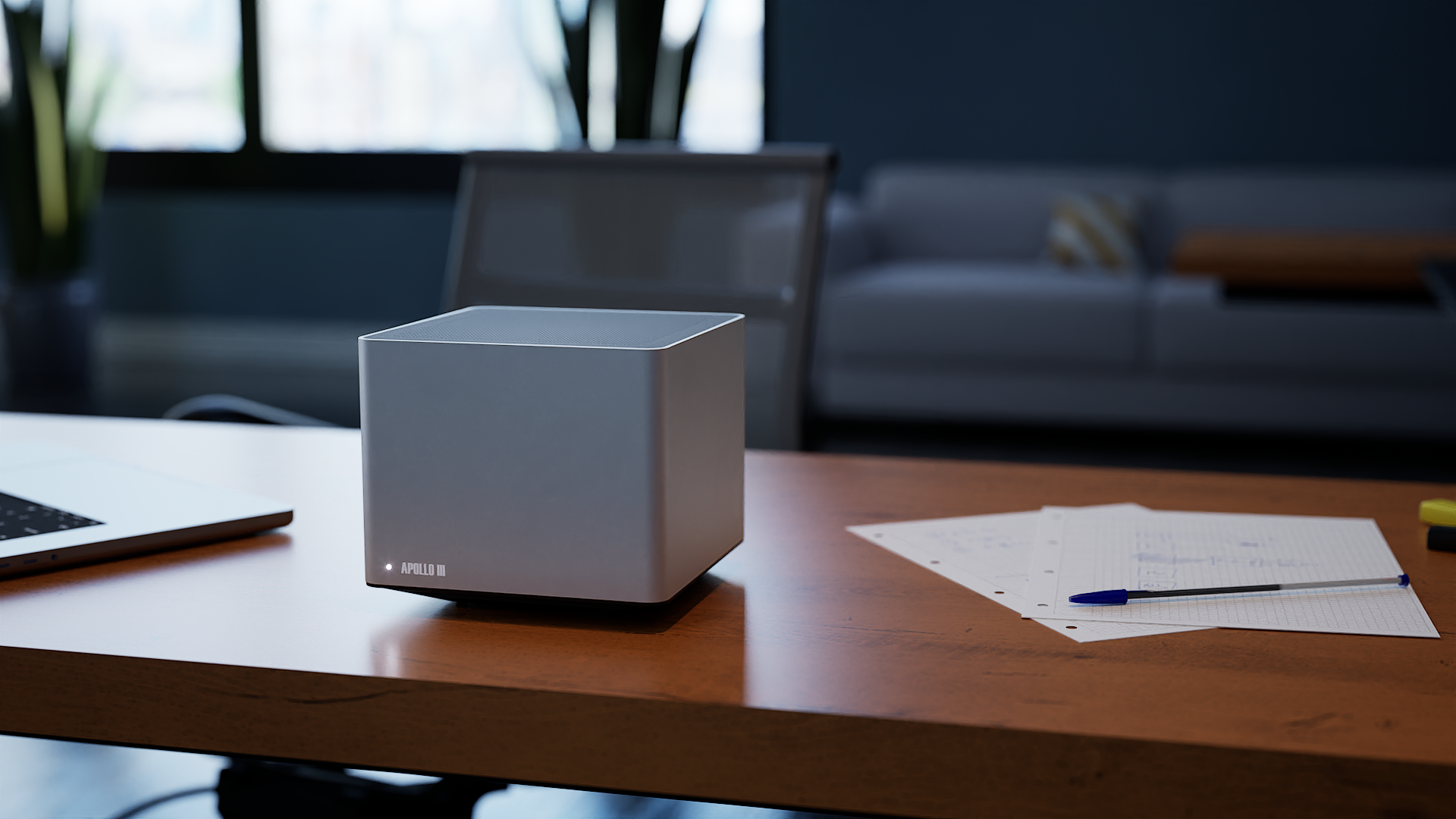
The Apollo III delivers up to 18 TH/s in Turbo Mode and reaches about 15 J/TH efficiency in Eco Mode. The system uses a desktop-class controller with 8 ARM cores, 8 GB RAM, and a 2 TB SSD. Users can run mining functions and a full node from the same machine.
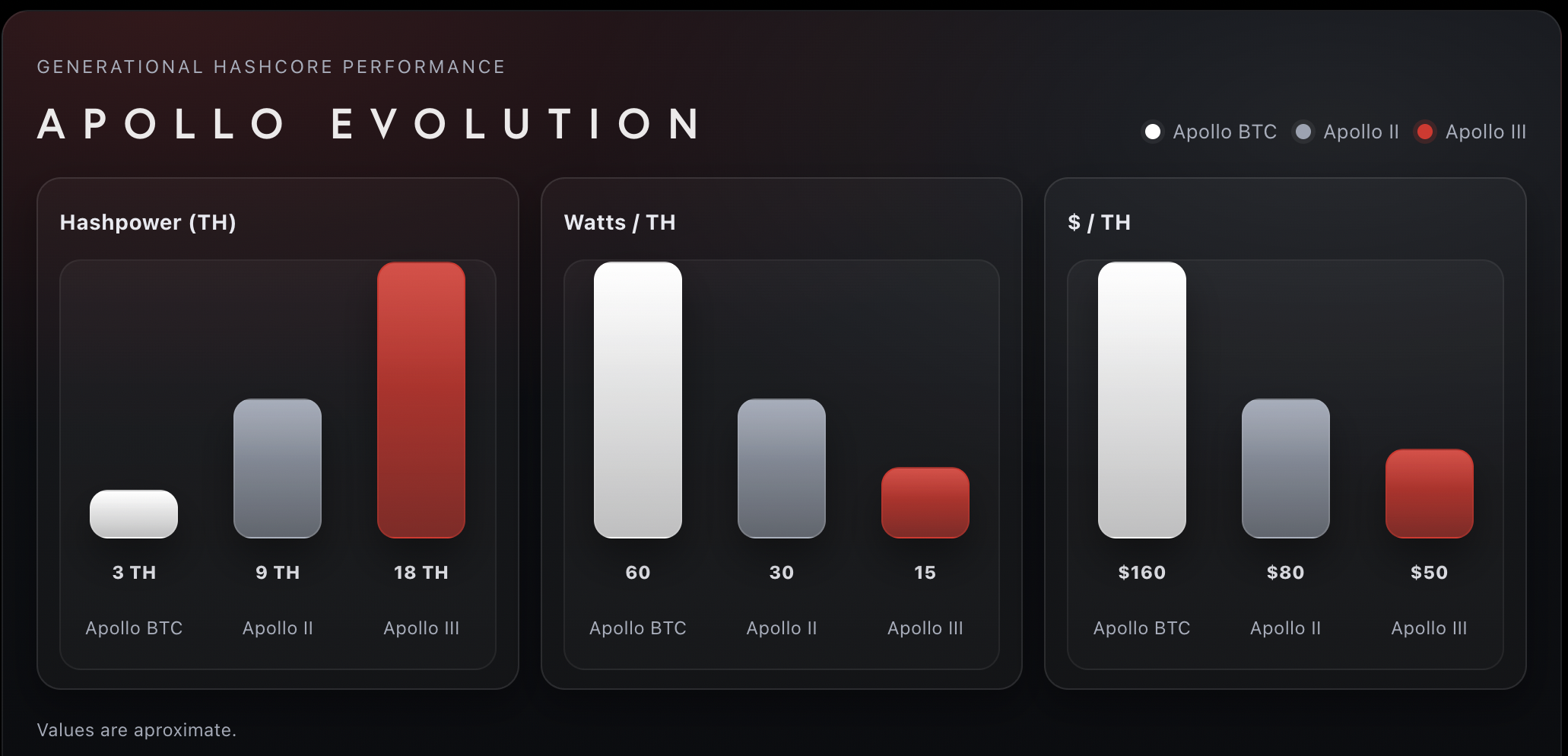
FutureBit designed the unit for continuous operation in a home or office environment. Output can remain above 10 TH/s with power usage similar to common household electronics. The company frames the system as a personal computing solution for Bitcoin infrastructure rather than a profit-focused mining device.
Technical documentation describes a custom controller built for node operation and stability. The platform supports full Linux desktop access and connectivity through Ethernet, Wi-Fi, Bluetooth, and USB. The design also includes a revised thermal architecture and a larger cooling system to support sustained performance.
Founder comments on decentralization goals
Founder John Stefanopoulos linked the product to broader decentralization efforts. He referenced a milestone achieved by customers in 2024.
“In 2024, our customers mined one of the first modern- era sovereign solo blocks, sending shockwaves through the industry and proving that industrial scale wasn’t a prerequisite for meaningful participation in Bitcoin,” Stefanopoulos said. “Apollo III expands that possibility. Nearly 20 terahash of efficient, accessible hash power in the hands of individuals strengthens the decentralization that Bitcoin was built for.”
The company views individual participation as a way to distribute hash power and reduce reliance on large facilities. Home operators can run their own node and verify balances without third-party services.
Community discussion and early reactions
FutureBit presented the product to online communities and industry followers. A post about the launch described the project as a continuation of earlier home-mining efforts and emphasized the shift toward domestic hardware production.
“Cant believe how much has changed in this space over the course of just 5 years, when we launched the Apollo BTC,” the announcement said. “Happy to announce the Apollo III is a continuation of this trend, and continues to pioneer the space we brought into the mainstream.”
The message highlighted a move to digital ASICs and a redesigned controller architecture. It also noted supply constraints during earlier product cycles and described expanded chip availability for the new release. Production has already started, with preorders planned ahead of initial shipments.
The announcement added that a modern controller with 8 ARM cores and 8 GB of RAM set new performance benchmarks for low-power node synchronization. The company described the mining core as a compact system that delivers higher hash output than older equipment in a smaller footprint.
Industry context and workforce implications
The release arrives at a time when discussions about mining centralization, regulatory pressure, and geographic concentration continue across the sector. Individual systems can contribute to geographic distribution and block template diversity. These factors support network resilience.
FutureBit frames the Apollo III as part of a broader shift toward accessible infrastructure. The project required expertise in chip design, embedded systems, thermal engineering, and protocol integration. These skill sets remain relevant for companies that develop smaller-scale mining solutions and node software.
Home mining no longer produces returns comparable to large facilities. The segment still attracts users who value privacy, verification, and technical independence. Companies that focus on educational tools and accessible hardware continue to target this audience.
Product positioning within FutureBit’s lineup
FutureBit built the Apollo III as the successor to earlier home miners such as the Apollo II. The new version integrates both mining and node capabilities in a single desktop system. The company promotes the product as a step toward what it calls personal Bitcoin infrastructure.
The device as a platform supports individual participation in network operations. The company said the system provides tools to operate a miner and node without dependence on industrial setups.
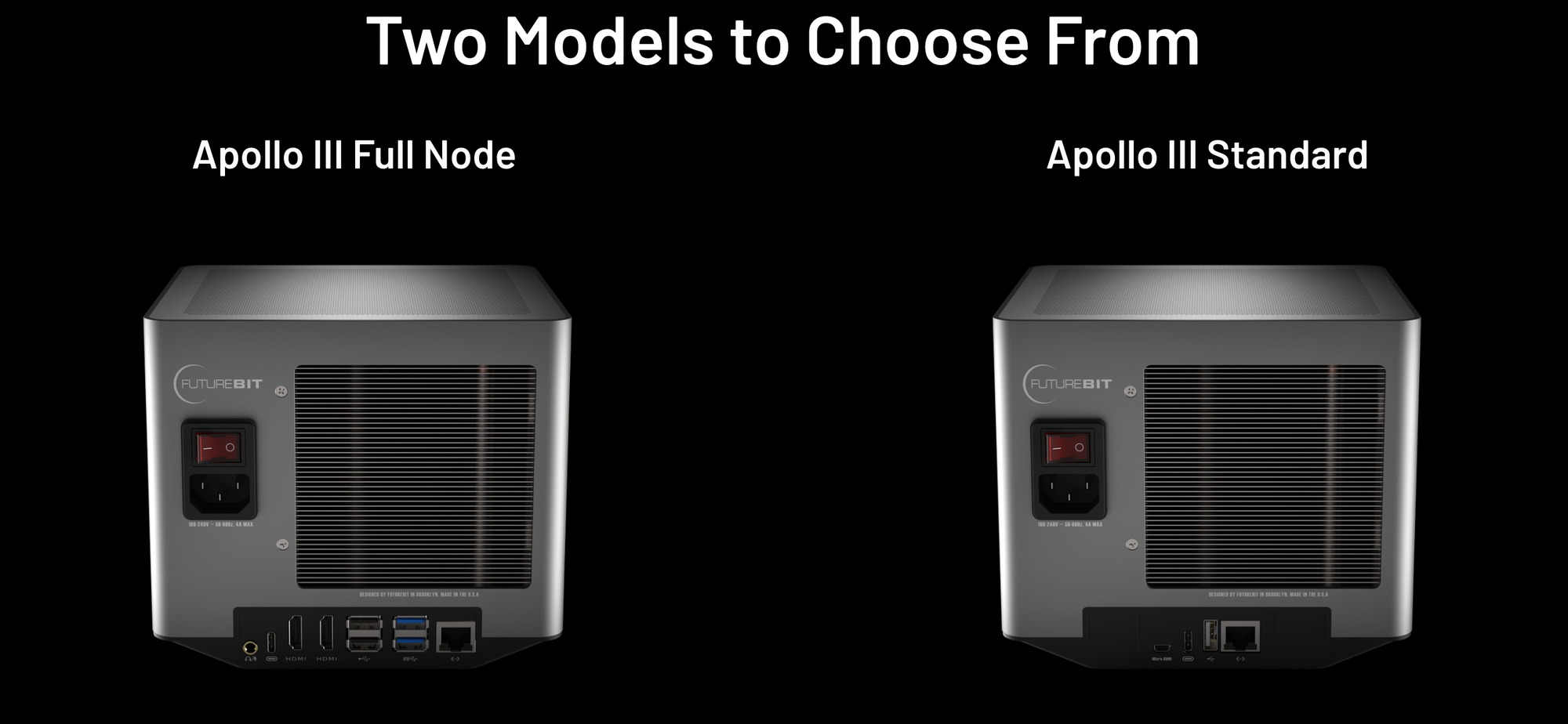
FutureBit also introduced two models. The Full Node version combines mining and node functionality, while a Standard version focuses on mining with a standalone controller.
The company states that the Apollo III continues a mission centered on distributed hash power and individual access. The launch reflects a strategy that emphasizes personal ownership of infrastructure rather than large-scale consolidation.
 Anastasiia G
Disclaimer: All materials on this site are for informational purposes only. None of the material should be interpreted as investment advice. Please note that, despite the nature of much of the material created and hosted on this website, HODL FM operates as a media and informational platform, not a provider of financial advisory services. The opinions of authors and other contributors are their own and should not be taken as financial advice. If you require advice, HODL FM strongly recommends contacting a qualified industry professional.